Voxel51 vs Lightly for visual and physical AI data
Voxel51 is the multimodal data platform for visual and physical AI. Teams use it to search, curate, label, and evaluate images, video, LiDAR, and robotics data like MCAP and LeRobot in one place, then trace model failures back to the data behind them. It scales to billions of samples, deploys anywhere from the cloud to air-gapped environments, and has a free plan you can start today. Lightly offers LightlyStudio for data curation and labeling, LightlyTrain for model training, and data collection and annotation services.
At a glance
Voxel51 vs Lightly at a glance
Voxel51 brings search, curation, annotation, and model evaluation for visual and physical AI data into one platform, from images to multisensor robot logs. Lightly pairs data curation in LightlyStudio with model training in LightlyTrain.
| Feature | Voxel51 | Lightly |
|---|---|---|
Platform and pricing | ||
Focus | Search, curation, annotation, and model evaluation for visual and physical AI | Data curation and labeling in LightlyStudio, model training in LightlyTrain, plus data services |
Free plan | Yes. 3 datasets, 10,000 samples each, 20GB, the Voxel51 Agent, SAM 2, and unlimited teammates, with no time limit | Open-source LightlyStudio (Apache 2.0) for one user and one dataset. 14-day trial of the hosted version |
Data volume | No plan limits published. Lightly cites 2M+ images in one dataset | |
Team and Enterprise plans | Team adds unlimited data and inference and self-hosted deployment. Enterprise adds on-premise and air-gapped deployment and a dedicated customer success engineer. Priced through sales | Enterprise adds multiple users and datasets, SSO, and roles. LightlyStudio prices not published. LightlyTrain commercial licenses from $5,000 a year |
Physical AI data | ||
Robotics data formats | Native MCAP and LeRobot on every plan, including free | |
Multisensor playback | ||
Search inside episodes | Segment-level embeddings, event-based search, and temporal tags | |
LiDAR and 3D | Every plan, with 3D cuboids and polylines synced to 2D views | |
Data generation and collection | Audit and enrich sensor data for NVIDIA Omniverse NuRec and Cosmos reconstructions and scene variations | Data collection and annotation services, including labeling for LLMs and synthetic data |
Workflows | ||
Search and curation | Natural-language, similarity, and event search, Data Lens for data lake queries, deduplication, and smart data selection | |
Model evaluation | Model comparison and scenario evaluation on every plan, from aggregate metrics to individual samples | |
Model training | Evaluate predictions from any model. Training and hosting stay in your own ML stack | |
Annotation | Agentic Labeling and annotator metrics on every plan, plus auto-labeling, SAM 2 segmentation and tracking, 2D and 3D labels, Intelligent Review, and multi-stage review workflows | Classification, bounding boxes, and masks, plus captions, 3D cuboids on MCAP, and SAM 3 as a plugin |
Managed labeling services | No. Software only | |
Extensibility and agents | Voxel51 Agent on every plan. Skills and MCP on Team and Enterprise. Python SDK and a plugin framework for custom workflows | |
Deployment and security | ||
Deployment | Open source runs locally. Enterprise is hosted by Lightly or on-premise, including air-gapped | |
Security | ISO 27001 and third-party penetration testing. PII and PHI protection and role- and dataset-based access controls on paid plans, plus audit logs on Enterprise. SSO with SAML, OIDC, and OAuth2 on paid plans | |
Lightly details verified November 1, 2026, from Lightly's website and documentation. Sources are linked in the table and in the FAQ below.
Pricing
How much does Lightly cost compared to Voxel51?
Voxel51: start free with your own data
The Free plan includes 3 datasets of up to 10,000 samples each, 20GB of hosted storage, 30,000 model inference requests and 30 hours of compute a month, and the Voxel51 Agent, with no time limit. Team starts at 8 user seats with unlimited data and inference. Enterprise starts at 25 user seats and adds on-premise and air-gapped deployment. Team and Enterprise are priced through sales.
Lightly: open source for one user, Enterprise by request
Open-source LightlyStudio is free for one user and one dataset, and the hosted version has a 14-day free trial. Enterprise pricing isn't published, and on-premise deployment costs extra. LightlyTrain commercial licenses start at $5,000 a year, with a free community license for students, researchers, and early-stage startups.
Try Voxel51 free with your own dataset
The Voxel51 free plan includes 3 datasets, 20GB of storage, and the Voxel51 Agent. No credit card, no time limit.

Physical AI
How do Voxel51 and Lightly handle MCAP, LeRobot, and LiDAR data?
Voxel51 is built for how physical AI data arrives: as episodes of camera streams, LiDAR sweeps, and robot state on the same clock. It plays every modality in sync, reads MCAP and LeRobot natively, and lets you search inside episodes for the exact moment that matters. Lightly added MCAP point clouds and 3D cuboid labeling to LightlyStudio in October 2026.
- MCAP and LeRobot load natively on every plan, including free.
- Segment-level embeddings find the exact grasp, failure, or interaction across hours of recordings.
- Event-based search and temporal tags let you mark and query moments across your whole dataset.
- Camera, LiDAR, sensor streams, plots, and maps stay in sync on one timeline.
Search your MCAP and LeRobot data in Voxel51
Upload MCAP or LeRobot episodes to a free workspace, or explore 1,000 DROID episodes or 2,378 LeRobot Community episodes first. Sign up with a work or .edu email.
Data curation
How does Voxel51 compare with Lightly for dataset curation?
Voxel51: curation driven by model behavior
Voxel51 connects curation to what your model is doing. Query your data lake with Data Lens, search by natural language, similarity, or events, group related samples across sensors, and use model signals to mine hard cases and build targeted training sets instead of retraining on everything.
Lightly: selection strategies
LightlyStudio computes embeddings automatically and offers text and image similarity search, plus selection strategies for diversity, typicality, deduplication, outliers, and class balance.
Model evaluation
How do Voxel51 and Lightly compare for model evaluation?
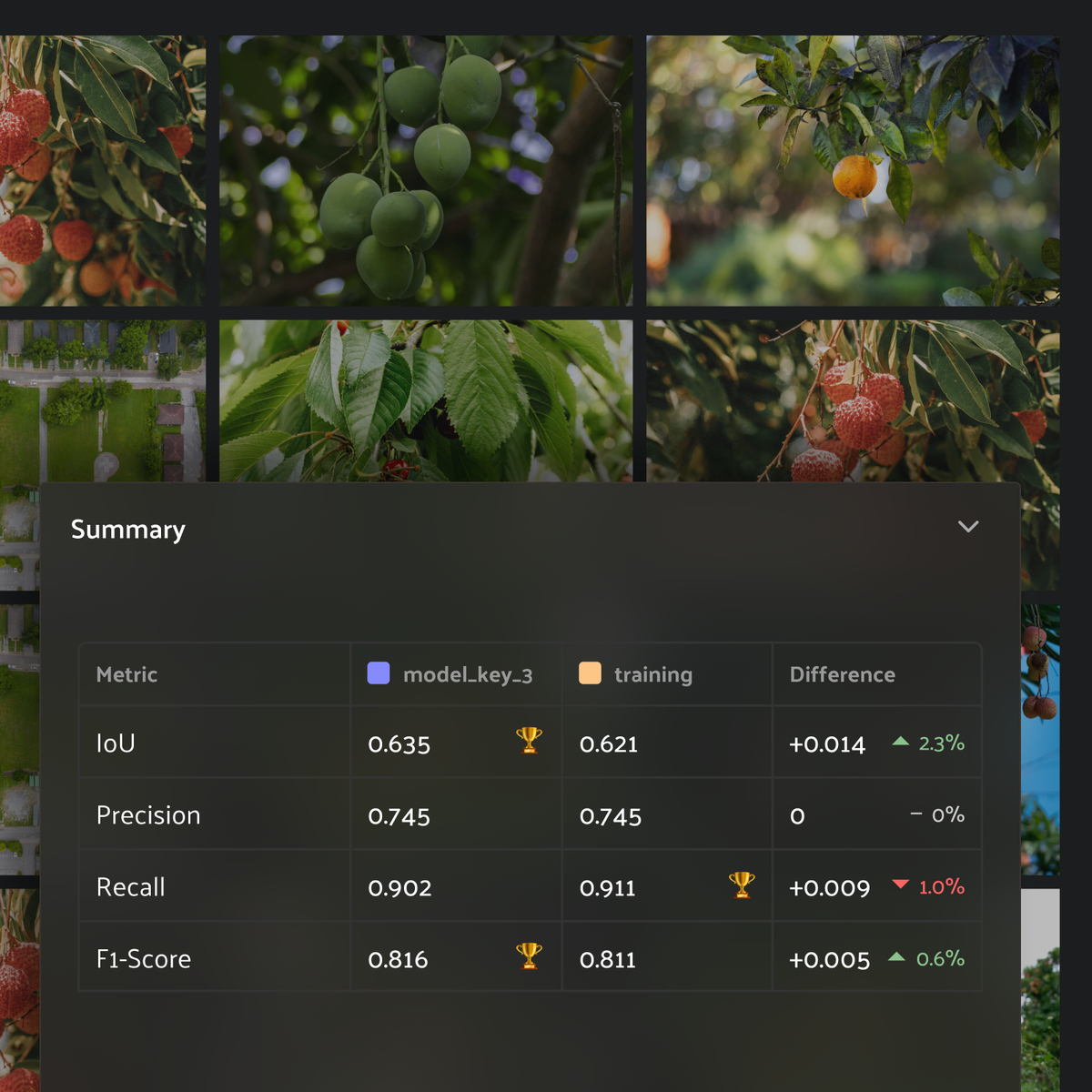
Voxel51 takes you from aggregate metrics to the exact samples behind them, with model comparison and scenario evaluation on every plan and no data cap on Team and Enterprise. Lightly's evaluation produces a confusion matrix and per-sample metrics for detection, classification, and segmentation, and LightlyTrain handles model training.
- Built-in evaluation for classification, detection, regression, polygons, and instance and semantic segmentation.
- Confusion matrices and precision-recall curves, with a click from any metric to the samples behind it.
- Compare models across scenarios and data slices to find where each one fails.
- Send failure cases straight back into curation and labeling.
Annotation
Does Voxel51 have built-in annotation, and how does it compare with Lightly?
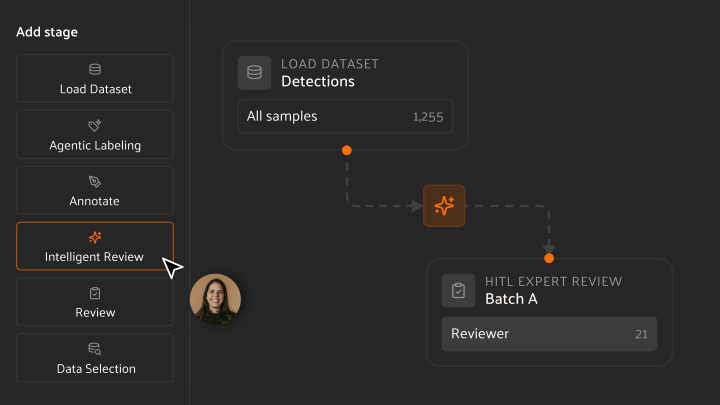
Yes. Voxel51 includes annotation on every plan, including free, and Agentic Labeling speeds up labeling by 80% without sacrificing quality. It labels images, video, and 3D LiDAR with SAM 2 tracking through video. LightlyStudio labels classifications, boxes, masks, and captions, added 3D cuboids in October 2026, and offers SAM 3 as a plugin. Lightly also sells annotation services.
- Label images, video, and 3D LiDAR with bounding boxes, polygons, polylines, classifications, cuboids, and temporal events.
- SAM 2 click-to-segment, plus SAM 2 tracking that carries masks forward and backward through video.
- Agentic Labeling: describe the label in plain English, add positive and negative examples, preview the results, then run the reusable agent on the full dataset. No code required.
- Intelligent Review and Smart Data Selection surface likely label errors and the samples worth labeling before you pay for them.
- Multi-stage review workflows with rejection loops and quality gates, plus real-time annotator metrics.
3x faster robotics dataset investigations
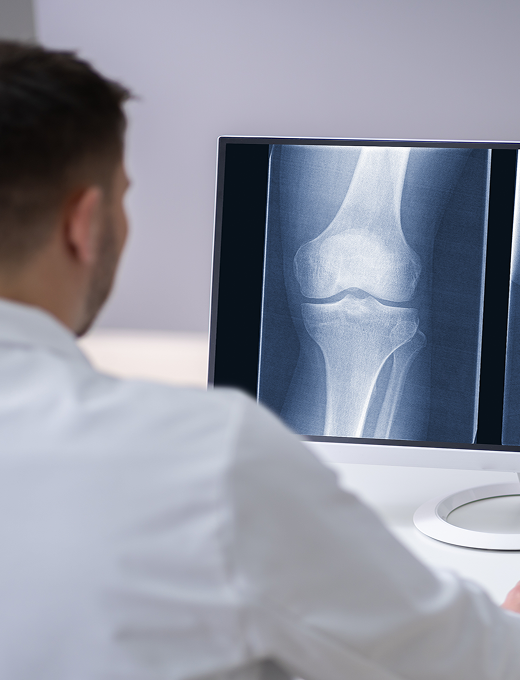
Berkshire Grey accelerated robotic vision model development and improved training data quality by adopting Voxel51 for multimodal data.





Maintained 99% fall detection rates for model performance.

















Maintained 99% fall detection rates for model performance.
Maintained 99% fall detection rates for model performance.
See Voxel51 on a dataset like yours
Find the samples worth labeling before you spend on annotation. Our team will walk you through it with data that looks like yours.
Extensibility
Can I extend Voxel51 and Lightly with my own code and agents?
Voxel51: agent, skills, and MCP
The Voxel51 Agent is on every plan and handles repetitive curation, annotation, and evaluation work. It connects to 100+ model providers or your own self-hosted models through MCP. On Team and Enterprise, add custom skills that encode how your team works and the MCP server that connects Voxel51 to your own AI tools. The Python SDK and plugin framework let you add custom logic, operations, and workflows.
Lightly: SDK and plugins
LightlyStudio can be run entirely from its Python API, with a CLI and Python plugins for tasks such as SAM 3 segmentation and zero-shot classification.
Deployment and security
How do Voxel51 and Lightly compare on deployment and security?
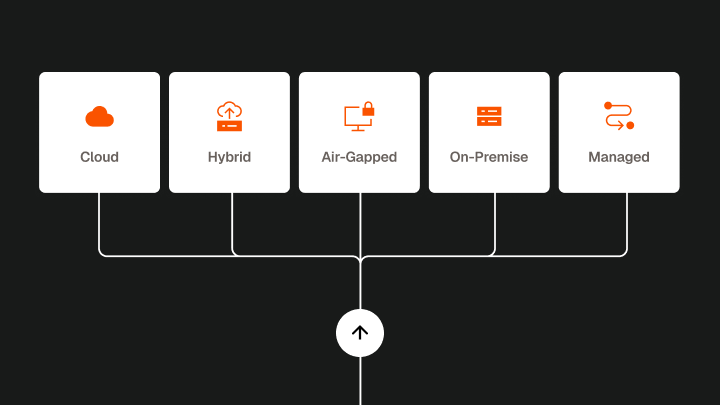
Voxel51 deploys wherever your data lives: in the cloud, hybrid, on-premise, or fully air-gapped with no external connectivity, backed by ISO 27001 certification. Lightly's open-source edition runs locally, and its Enterprise edition is hosted by Lightly or on-premise, including air-gapped, at a premium. Lightly lists ISO 27001 and GDPR.
- Deploy in the cloud, hybrid, on-premise, or fully air-gapped with no external connectivity, or as a managed service.
- ISO 27001 certified, with third-party penetration testing, plus PII and PHI protection on paid plans.
- SSO with SAML, OIDC, and OAuth2, plus role-based and dataset-based access controls, on paid plans.
- Secrets management and unlimited dataset versions on paid plans, plus audit logs on Enterprise.
Choosing
Voxel51 vs Lightly: which should you choose?
Choose Voxel51 when your team needs to search, curate, label, and evaluate physical AI data together, including MCAP, LeRobot, and synchronized sensor streams. Lightly fits teams that want curation paired with LightlyTrain model training, or a free open-source tool for one user and one dataset.
Choose Voxel51 if
- Your whole team needs to work on the same datasets, starting on a free plan with unlimited teammates
- You work with robotics or autonomous vehicle data: MCAP, LeRobot, LiDAR, and multiple synced sensors
- You want to evaluate models and trace failures back to the samples behind them
- You want to label images, video, and 3D LiDAR with SAM 2 tracking and Agentic Labeling
- You want to start free with your own data today
Choose Lightly if
- You want curation paired with LightlyTrain pretraining and fine-tuning
- You need a free, open-source tool for one user and one dataset
- You want to outsource data collection or annotation
Switching
How do I move from Lightly to Voxel51?
- Export your annotations from LightlyStudio as COCO, YOLO, or Pascal VOC.
- Create a free Voxel51 workspace in your browser, with nothing to install and no credit card.
- Upload images, video, point clouds, MCAP, or LeRobot files from your computer.
- Explore 20+ demo datasets, including DROID, LeRobot Community, and PandaSet, while you get set up.
- Invite your whole team. The free plan includes unlimited teammates.
- Moving large labeled datasets or need a self-hosted deployment? Our team can help you plan the migration.
Voxel51 vs Lightly: frequently asked questions
Yes, with limits. Lightly's open-source LightlyStudio is free for one user and one dataset, and the hosted version has a 14-day free trial. Voxel51 has a hosted free plan with 3 datasets, 10,000 samples per dataset, 20GB of storage, the Voxel51 Agent, and unlimited teammates, with no time limit and no credit card.
Lightly doesn't publish LightlyStudio Enterprise pricing, and on-premise deployment costs extra. LightlyTrain commercial licenses cost $5,000 a year for startups and $10,000 a year for growing companies, with custom pricing for larger ones. Voxel51 publishes its plan limits, has a free plan, and offers unlimited data on Team and Enterprise.
Yes, as of October 2026. LightlyStudio 1.2.0, released October 23, 2026, added MCAP point-cloud sequences and 3D cuboid labeling. Voxel51 reads MCAP and LeRobot natively on every plan, including free, and plays camera, LiDAR, and sensor streams in sync on one timeline.
Voxel51 has built-in annotation on every plan, including free. Agentic Labeling turns plain-English prompts into labels with vision-language models, SAM 2 segments and tracks objects through video, and Intelligent Review flags likely label errors. Annotation projects include configurable multi-stage review workflows and real-time annotator metrics.
No. Voxel51 evaluates predictions from any model and helps you find the data that improves it, while training and hosting stay in your own ML stack. Lightly offers model training through LightlyTrain.
Voxel51 ties curation to model behavior: query your data lake, search inside multisensor episodes, and use model signals to build targeted training sets. Both platforms offer embeddings, similarity search, and deduplication, and Lightly adds selection strategies such as diversity and typicality sampling.
Start a free Voxel51 workspace and upload your media today, and the Voxel51 team can help you plan a move for large labeled datasets. LightlyStudio exports annotations as COCO, YOLO, Pascal VOC, YouTube-VIS, or CSV.
A Lightly alternative for physical AI data should offer native support for MCAP, LeRobot, and LiDAR, synchronized multisensor playback, search inside episodes, model evaluation tied to the data, a free plan your whole team can use, and the deployment options your security team needs. Voxel51 covers each of these, and you can try it free. See all comparisons at voxel51.com/compare.
Voxel51 is built for visual and physical AI data, including images, video, MCAP, LeRobot datasets, 3D point clouds and meshes, DICOM and NIfTI, geospatial data, and custom media types.
Lightly details come from Lightly's website, documentation, and GitHub, verified November 1, 2026: homepage, LightlyStudio, data services, LightlyStudio FAQ, Enterprise, on-premise, security, annotations, LightlyTrain licensing, and the LightlyStudio changelog. Voxel51 details come from the pricing, get started, multimodal, search, annotation, Agentic Labeling, curation, evaluation, data generation, robotics, agent, deployment, and security pages.
More Voxel51 comparisons
Talk to the Voxel51 team about your data
Tell us about your data, your models, and where you deploy. We'll show you Voxel51 on a dataset like yours.
© 2026 Voxel51 All Rights Reserved