Frame-level precision for video annotation
Voxel51 Annotation gives your team AI-powered object tracking with SAM2, temporal event labeling for action and activity recognition, and Smart Data Selection for high-value video data samples.

SMARTER VIDEO LABELING
Go from raw video footage to training-ready datasets, faster
Voxel51 supports every video label type your models need, from frame-accurate bounding boxes and pixel-precise masks to cross-frame object tracks and timestamped event spans.
Automated tracking from a single keyframe
Draw once. SAM2 locks onto your object's visual features and tracks it across frames automatically, adjusting for movement, scale, and lighting. When the model loses its lock due to occlusion or blur, add a corrective keyframe and tracking resumes.
Bounding Boxes
Track objects across frames with precision
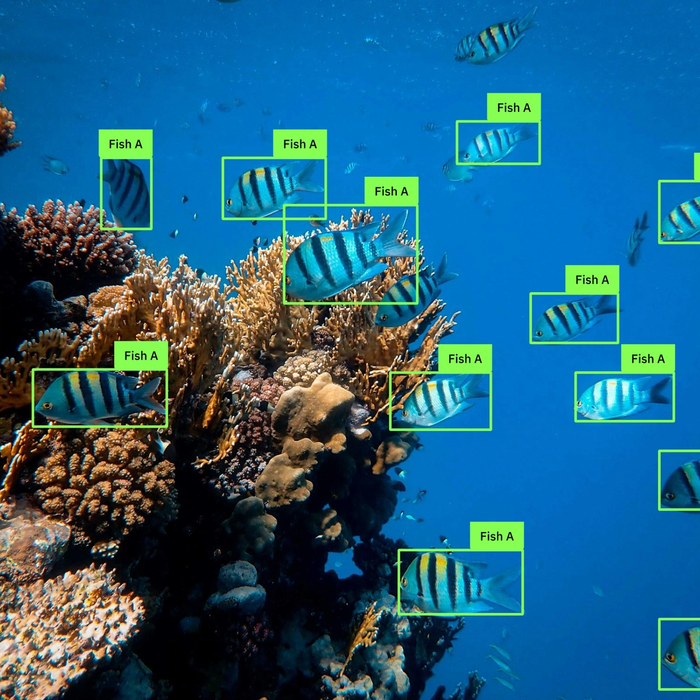
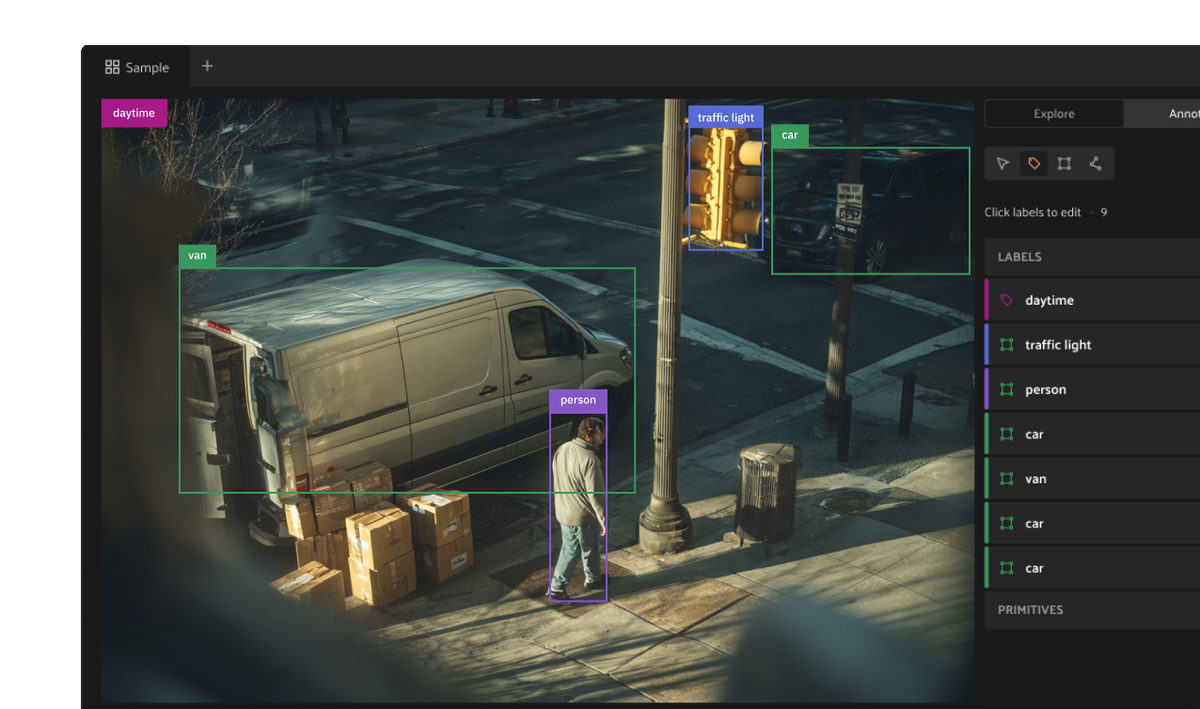
Draw precise bounding boxes around objects in seconds. Bounding boxes are the most common annotation type for detection models — and the fastest to produce at scale.
Classifications
Context at the frame level or across the full clip
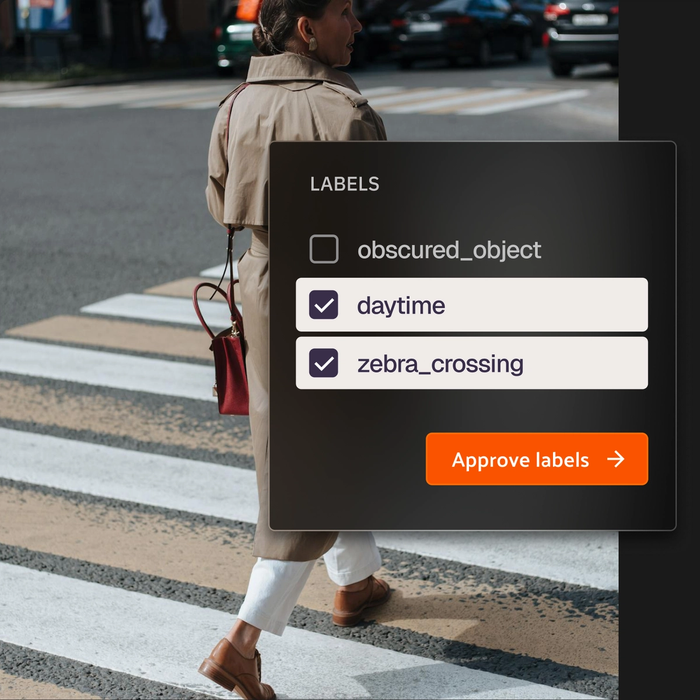
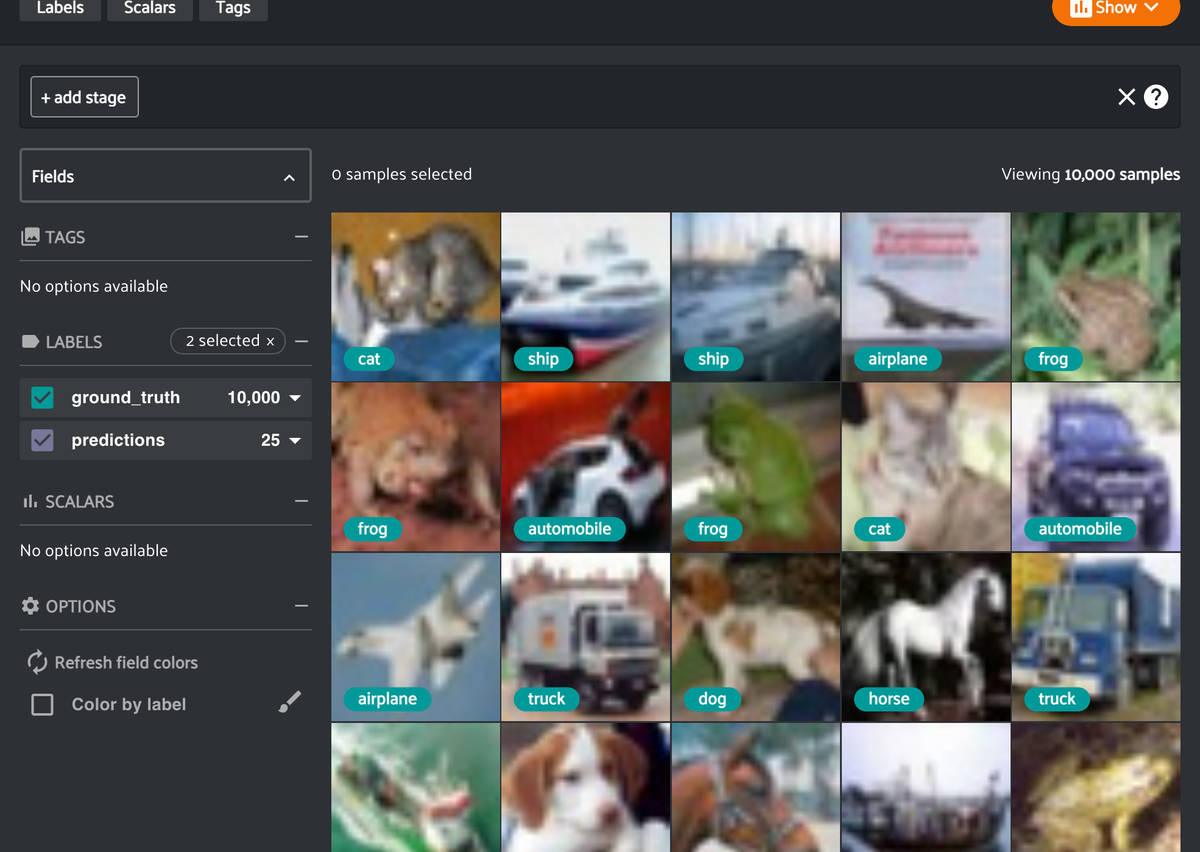
Apply classifications per-frame to capture changing conditions — visibility, scene state, behavior — or at the clip level to describe the video as a whole.
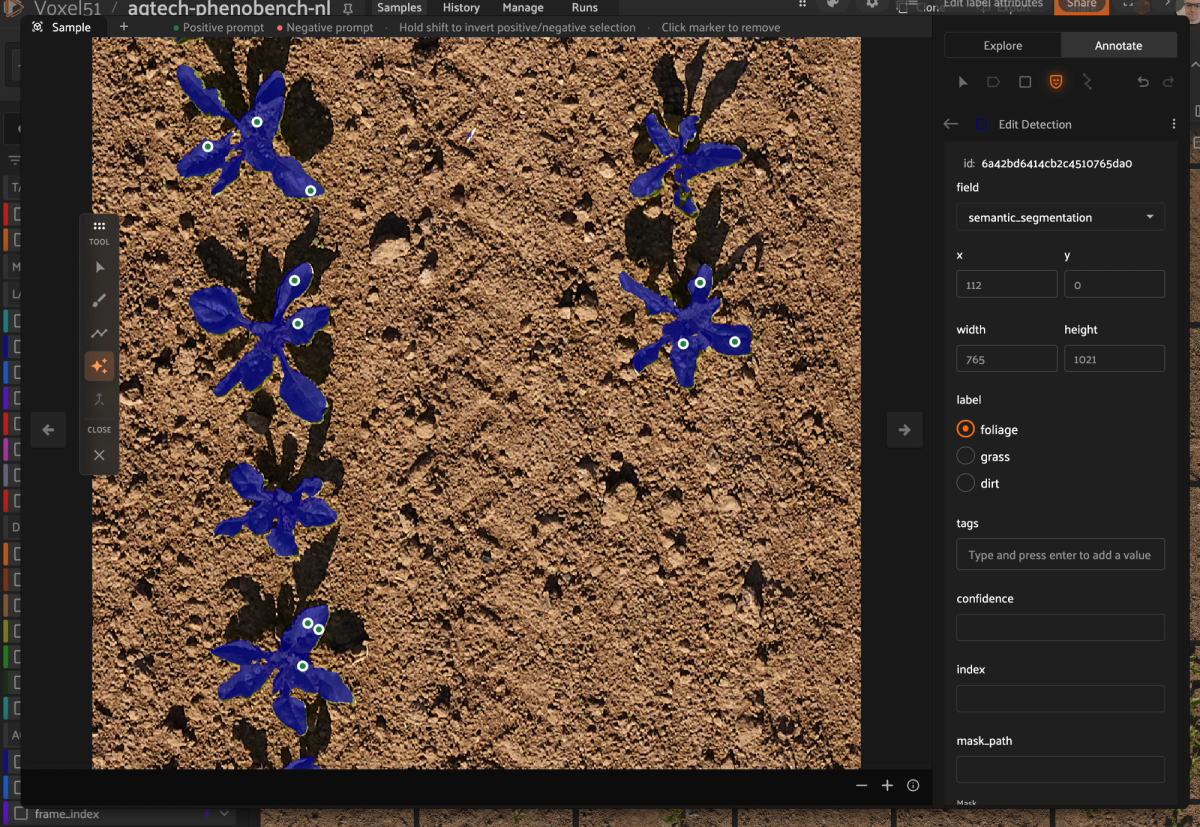
Segmentation Masks
Pixel-level precision for complex boundaries
Create pixel-accurate masks per frame for tasks where exact object boundaries matter — road surfaces, tissue regions, crop health zones. Supports brush and pen tools.
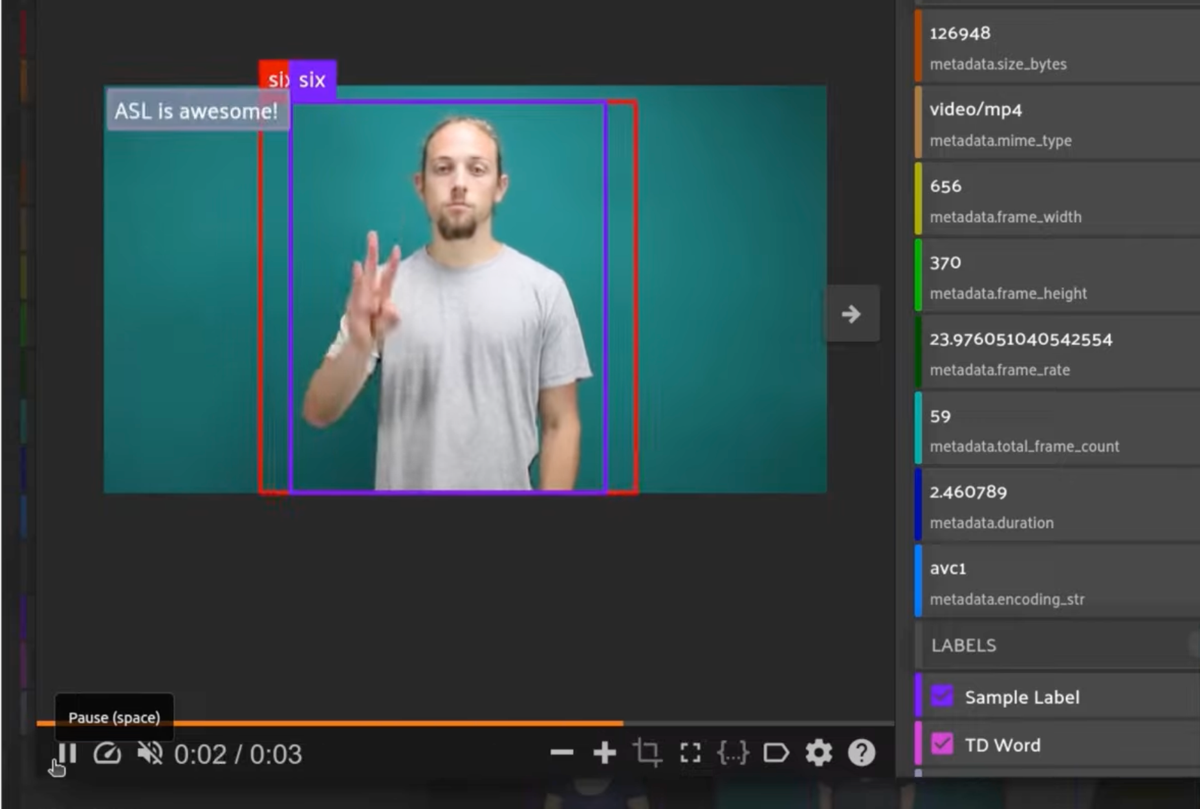
Temporal events
Mark what happens and when
Mark the start and end of an action, activity, or event directly on the timeline. Temporal events give your model the context it needs for action recognition, anomaly detection, and activity classification.
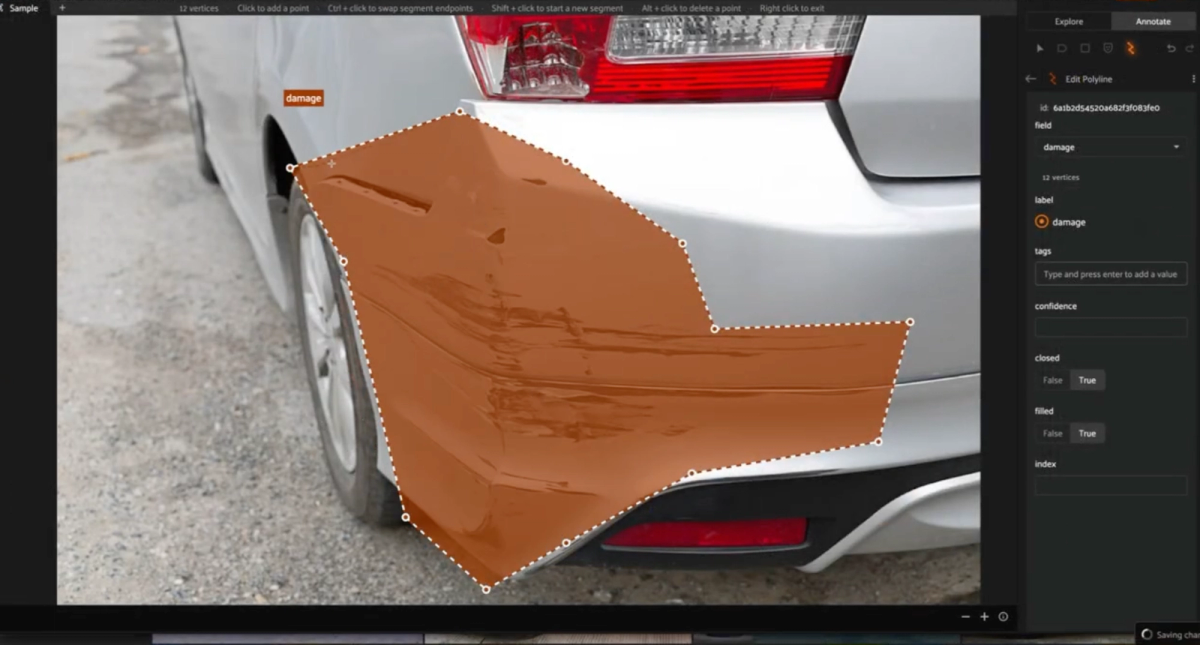
Polygons
Precise outlines beyond bounding boxes
Outline irregular shapes per frame for boundary annotation more precise than a bounding box, segmenting vehicle silhouettes in autonomous driving datasets or tracing defect regions in manufacturing QA footage.
Agentic Video Labeling
Automate manual video labeling with agents
Speed up your video labeling process by 80% without sacrificing labeling quality
Agentic Labeling generates pre-labels across your video dataset as a background task, so your team starts from a reviewable baseline rather than a blank canvas.
Describe what needs to be labeled in plain language, review the outputs, refine the prompt, and save the configuration to reuse across new batches.
Voxel51 Video Annotation
Built for teams that want precise video labels at scale
From tracking drift to inconsistent event boundaries to label schemas that don't account for the temporal dimension, Voxel51 Annotation is designed to resolve common video annotation bottlenecks.
Ontologies built for temporal labels
Define which labels live at the frame level, which apply to the full clip, and which mark temporal spans to keep label quality consistent and reduce time spent going back and forth with your labelers.
Catch tracking errors before they compound
Tracking mistakes don't stay isolated, they propagate across every frame in the sequence. Intelligent Review uses embeddings and mistakenness scores to surface inconsistencies across object tracks and temporal events before they reach your training pipeline.
Fix labels in context, at scale
Correct annotation mistakes directly in Voxel51's video editor. Scrub the timeline, edit the frame, and continue—all without exporting, round-tripping, or switching tools.
ML Research
Auto-labeling rivals human performance
The latest paper from our ML researchers, Auto-Labeling Data for Object Detection, benchmarks auto-labeling against human annotation. We reveal how foundation models can deliver labels at near-human accuracy, while reducing annotation costs by up to 100,000×.

Data labeling platform
Improve model performance with an end-to-end video labeling platform
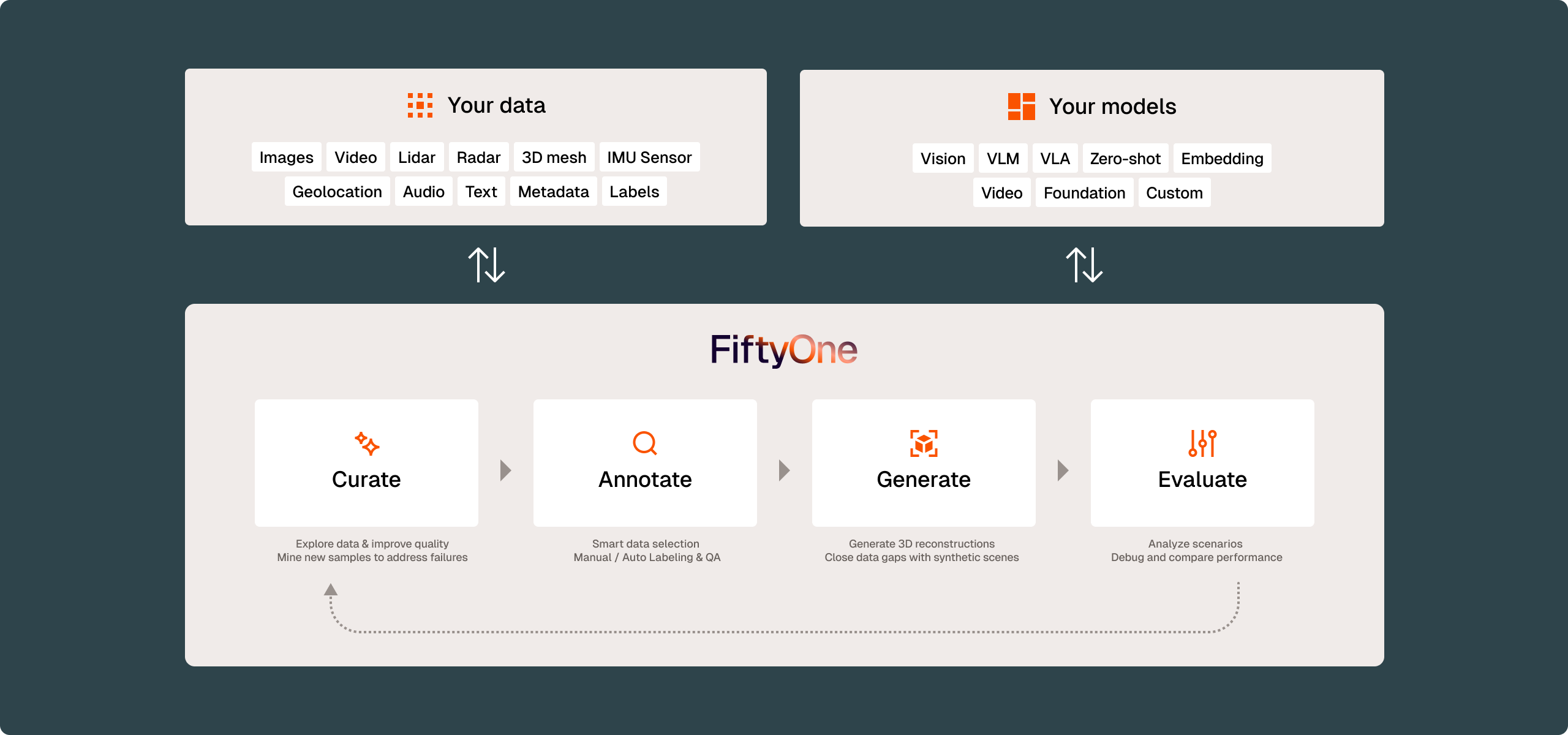
Voxel51 is a unified data platform for multimodal and physical AI, available as open source and as Voxel51. Your team can surface model failures, curate the right video data to address them, and route the insights back into the annotation workflow, without leaving the platform.
Video annotation project management with configurable review workflows
Design and manage multi-stage video annotation pipelines that give you full control over how work moves from video labeling to review and approval. Built-in project management review stages, rejection loops, and quality gates help you coordinate teams, enforce standards, and keep production datasets moving without operational friction.

Standardize video annotation schemas and ontologies
Give your whole team one source of truth for how data gets labeled. Video annotation schemas set the structure, classes, and attributes for every label, and reusable ontologies let you apply the same definitions across video datasets and projects. Less ambiguity, cleaner data, and annotations that align with what your models need downstream.
Questions on video labeling?
We have answers.
Voxel51 supports bounding boxes, SAM2-powered object tracking, temporal events, frame-level classifications, clip-level classifications, segmentation masks, and polygons for video data.
Frame-level annotations are applied per-frame and can change across the timeline — for example, a bounding box that follows a moving object or a classification that tracks changing weather or lighting conditions. Clip-level annotations apply to the entire video — for example, tagging a scene type or classifying overall visibility. Voxel51 supports both in the same ontology.
Temporal events label what happens and when — with a start timestamp and an end timestamp. They're the right label type for action recognition, activity detection, surgical workflow annotation, and any task where your model needs to understand event boundaries rather than just object location.
Agentic Labeling lets you describe what you need labeled in natural language. Voxel51 generates example outputs, you review and refine the prompt, then save the configuration to auto-label datasets at scale as a background task.
You initialize the object on one frame and SAM2 automatically tracks it across subsequent frames, assigning a persistent unique ID so your model learns to associate the same entity across time. If the model loses its lock due to occlusion or motion blur, you add a corrective keyframe and tracking resumes. Annotators focus on reviewing, rather than starting from scratch.
Occlusion happens when an object is temporarily hidden behind another object in the scene. The track stays active and is marked as occluded during those frames — teaching your model that the object is still present even when it's not visible. This is critical for training spatially aware models that need to handle real-world footage.
Most annotation tools treat video as a stack of images. Voxel51 is built around the temporal structure of video — tracking objects across time, labeling events with start/end precision, and integrating annotation directly with Smart Data Selection and model evaluation so your team can close the loop without switching platforms.