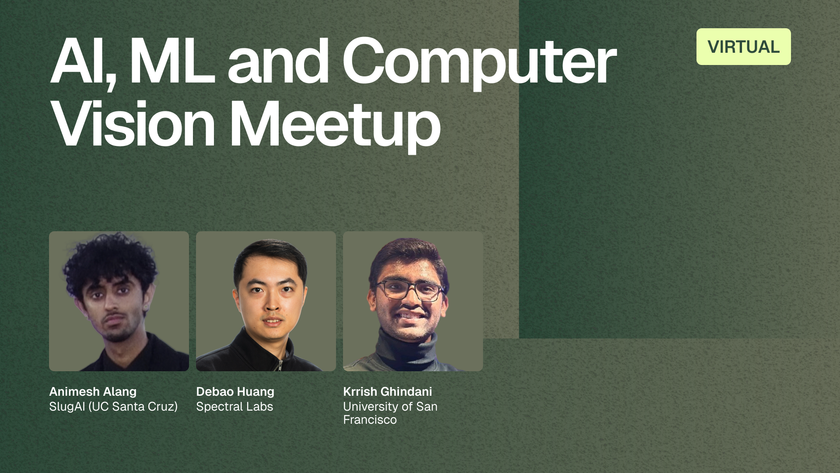
Register for the Zoom
9:00 AM - 11:00 AM PST
Online. Register for the Zoom!
Speakers
About this event
Join our virtual meetup to hear talks from experts on cutting-edge topics across AI, ML, and computer vision.
Schedule
Verifier-Gated Generative Tutoring: When the LLM Writes Lessons but Never Decides Mastery
Adaptive tutors increasingly let LLMs both generate content and decide mastery — a risky coupling. dino.study separates those roles: models draft interactive lessons under verifier gates, while deterministic Python BKT + FSRS tracks mastery and review timing. I'll show the production architecture (Expo app + Bun API + Postgres prerequisite graphs), cost (~$0.04/lesson), and an honest LLM-simulated N=30/arm dry-run that is not a human peer-reviewed study.
The talk is code-forward with a live demo. Aimed at ML/CV practitioners curious about evaluation, mastery modeling, and shipping educational AI.
Building CAD for Machine Intelligence: The Future of AI-Driven Engineering
What does it take to build AI systems that can reason about geometry, design mechanical parts, and automate engineering workflows? In this talk, we introduce Quartz, a CAD system built for machine intelligence, and explore how high-performance geometry execution, reinforcement learning, and massively parallel environments enable AI agents to learn engineering through design and iteration.
We demonstrate how AI can create and modify complex assemblies while preserving editable CAD histories, and share our vision for the future of AI-driven engineering.
Does 70% Mean 70%? Building an Honest Tennis Win-Probability Engine
When a model says a tennis player has a 70% chance to win, does that player win 70% of the time? I built Tiebreak, a win-probability engine trained on about 900,000 ATP matches that layers surface-adjusted Elo, a point-by-point Markov chain and gradient boosting, updating live as a match unfolds.
Early versions looked better than they were because the same match leaked into both training and test data, and I show exactly how I caught it with a chronological, match-level split. Reliability diagrams then show where the model is calibrated and where it is overconfident.
Attendees leave with a practical checklist for building and honestly evaluating any ML model that outputs probabilities.
You might also enjoy these events
Virtual
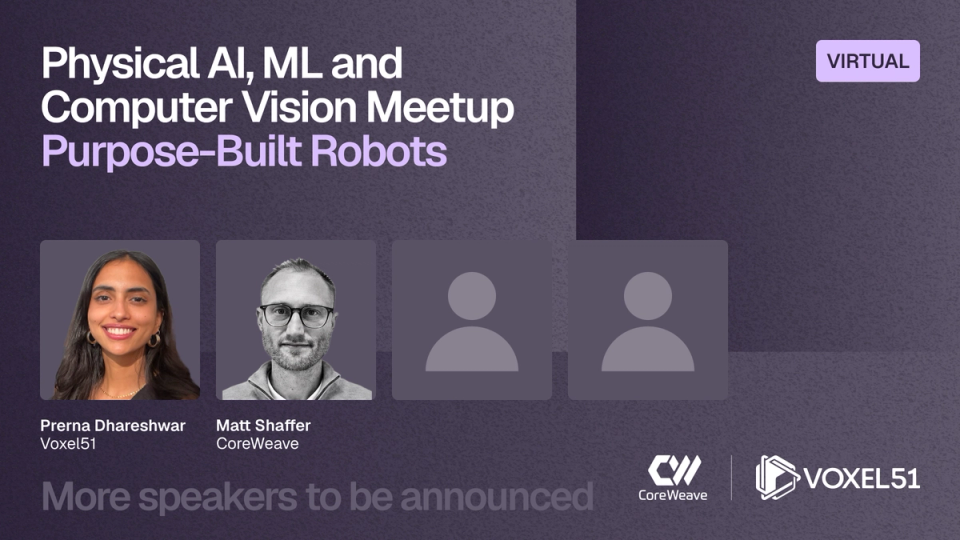
Physical AI, ML and Computer Vision Meetup: Purpose-Built Robots - January 27, 2027
Join us for the Physical AI, ML and Computer Vision Meetup series focused on robotics use cases. In this session we will...
Virtual
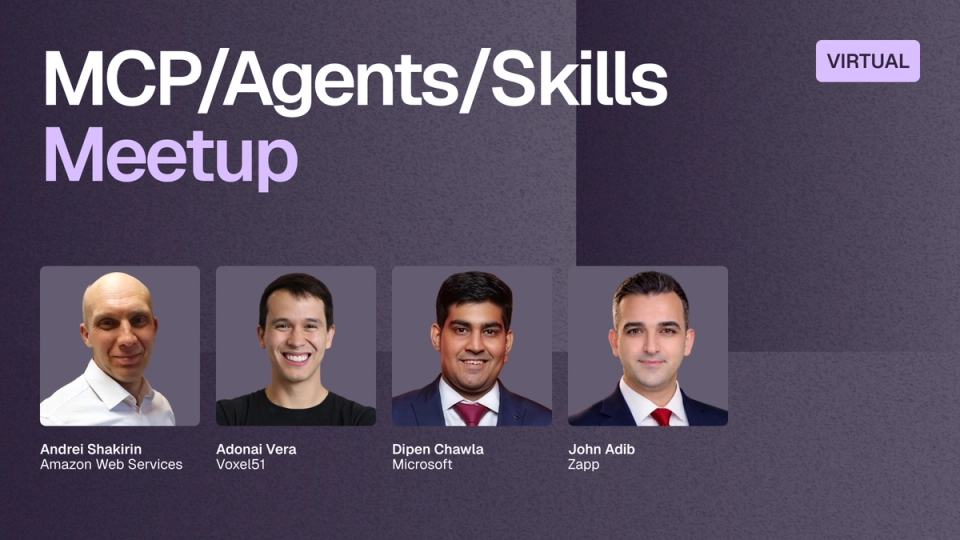
MCP/Agents/Skills Meetup - January 14, 2027
Join our virtual meetup to hear talks from experts on cutting-edge topics across AI, ML, and computer vision.