Voxel51 Annotation
Voxel51 is the multimodal data annotation platform that automates the annotation process with intelligent QA and active learning to deliver high quality labels.
Automated QA & Review
Maximize label quality with automated annotation QA
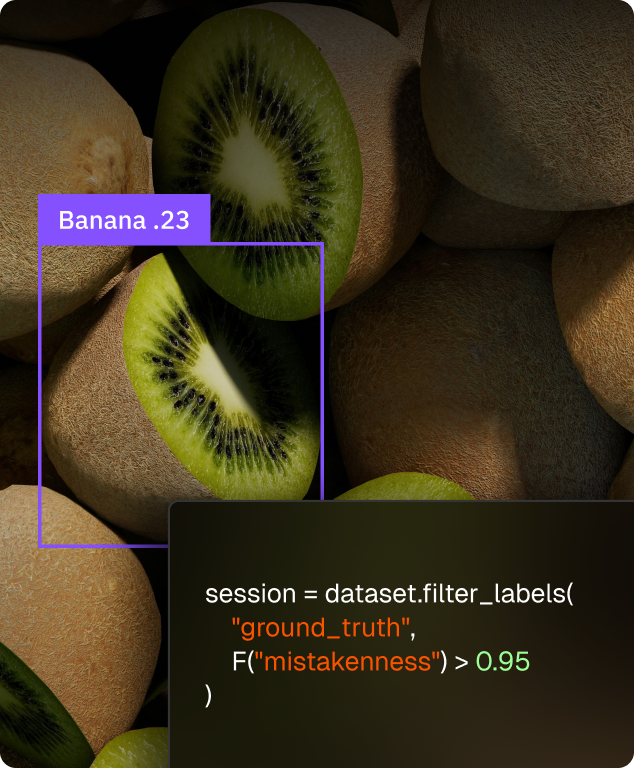
Intelligent Review uses embeddings, model predictions, and auto-label comparison to surface annotation errors at scale. Spot systematic labeling mistakes across entire batches, review the highest-risk labels first, and resolve quality issues in bulk.
Agentic Auto-Labeling
Speed up the annotation process with Agentic Labeling
Agentic Labeling, powered by VLMs, speeds up data labeling by 80% without sacrificing quality.
Describe what you need in natural language, review agent outputs and zero-shot labels, and refine your prompts until the labels align with your annotation guidelines. Labels can then be propagated across similar objects in the dataset. Then save that configuration and reuse it across projects. No code required.
Agents handle the repetitive volume while your team focuses on review and edge cases.
Smart Data Selection
Make every annotation dollar count with active learning
Not all data is equally valuable. According to the State of Physical AI report, one in three teams (36%) say that most of their annotated data never makes it into production.
Smart Data Selection helps teams identify the samples most likely to improve model performance, reducing wasted labeling effort and ensuring budgets are spent where they'll have the greatest impact.
Select the right data before you label it
Use model-assisted tagging and pre-filtering to surface the most relevant samples upfront, so annotation teams spend time on data that actually improves models.
Find exactly what needs attention in seconds
Search and filter your dataset using natural language and intuitive filters to quickly isolate specific scenarios, edge cases, or labeling tasks without digging through raw data.
Focus on high-value, high-quality samples
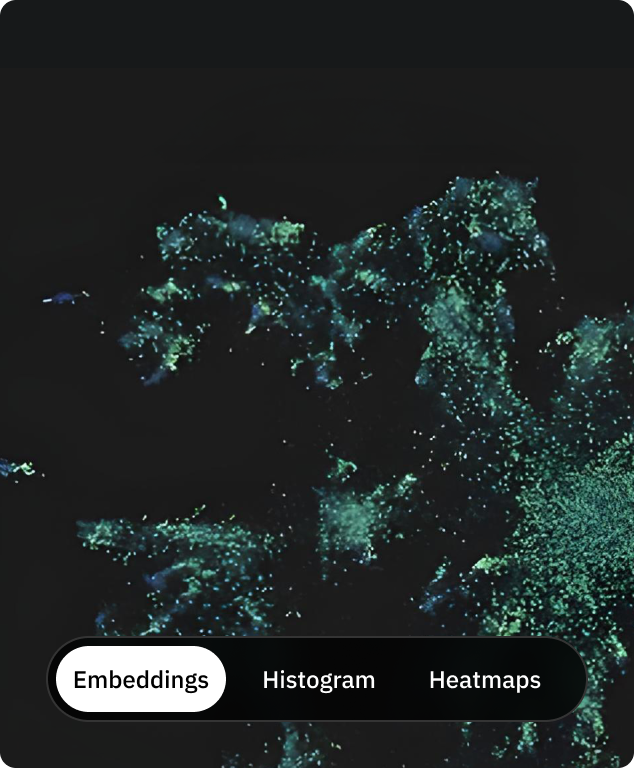
Surface similar samples and outliers, remove blurry or low-quality data, and visualize class distribution to keep datasets balanced and production-ready.
Built for production
Drive high-throughput, high-quality annotation
Annotation project management with configurable review workflows
Build multi-stage annotation pipelines that give you full visibility and control over how work moves from labeling to review to approval, with configurable review stages, rejection loops, and quality gates.
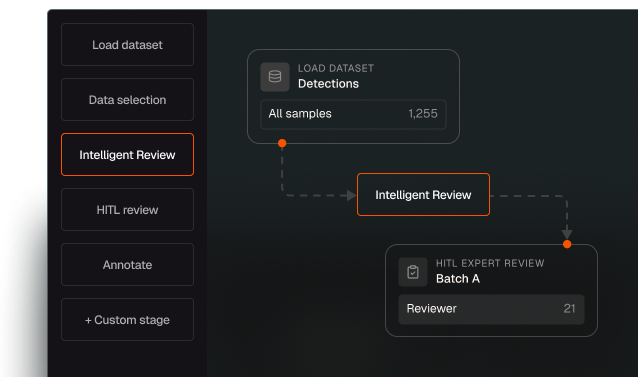
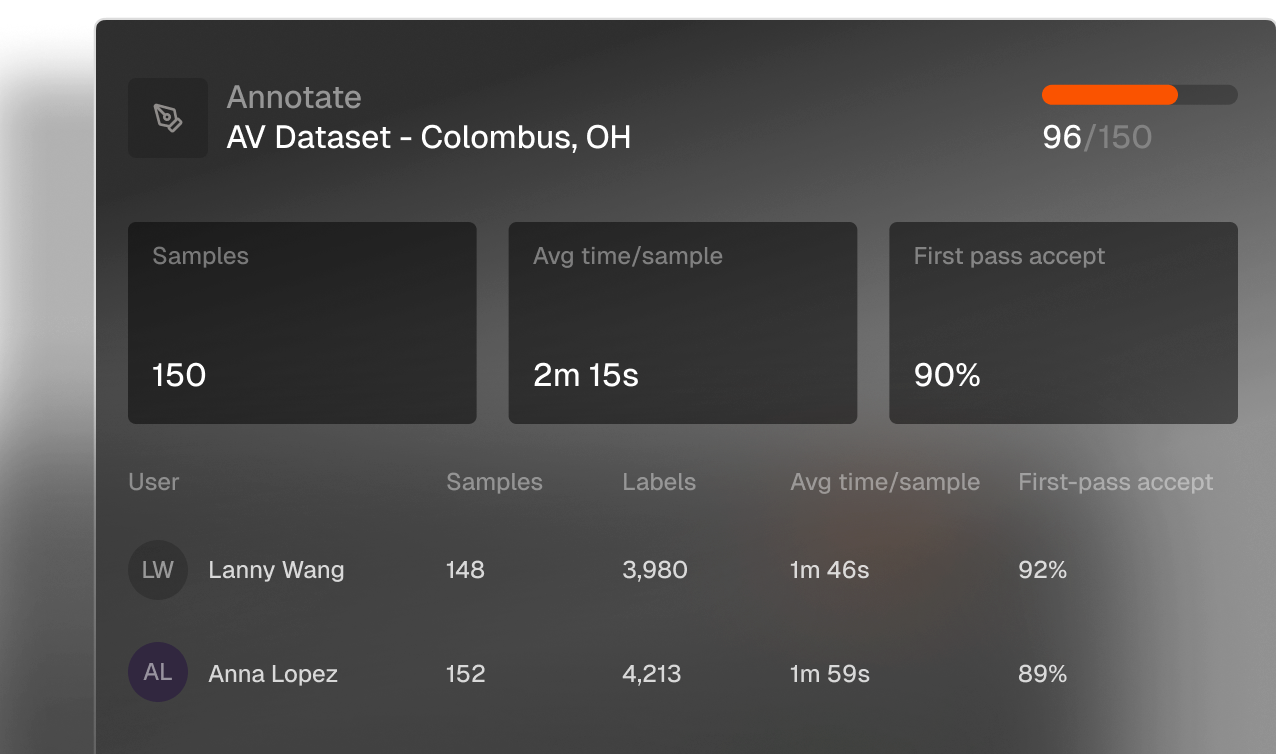
Track and optimize annotator productivity with real-time performance metrics
Track labeling velocity, throughput, and quality across projects and annotators. Spot bottlenecks and keep production on track in real time.
Voxel51 Annotation
Supported modalities in Voxel51 Annotation
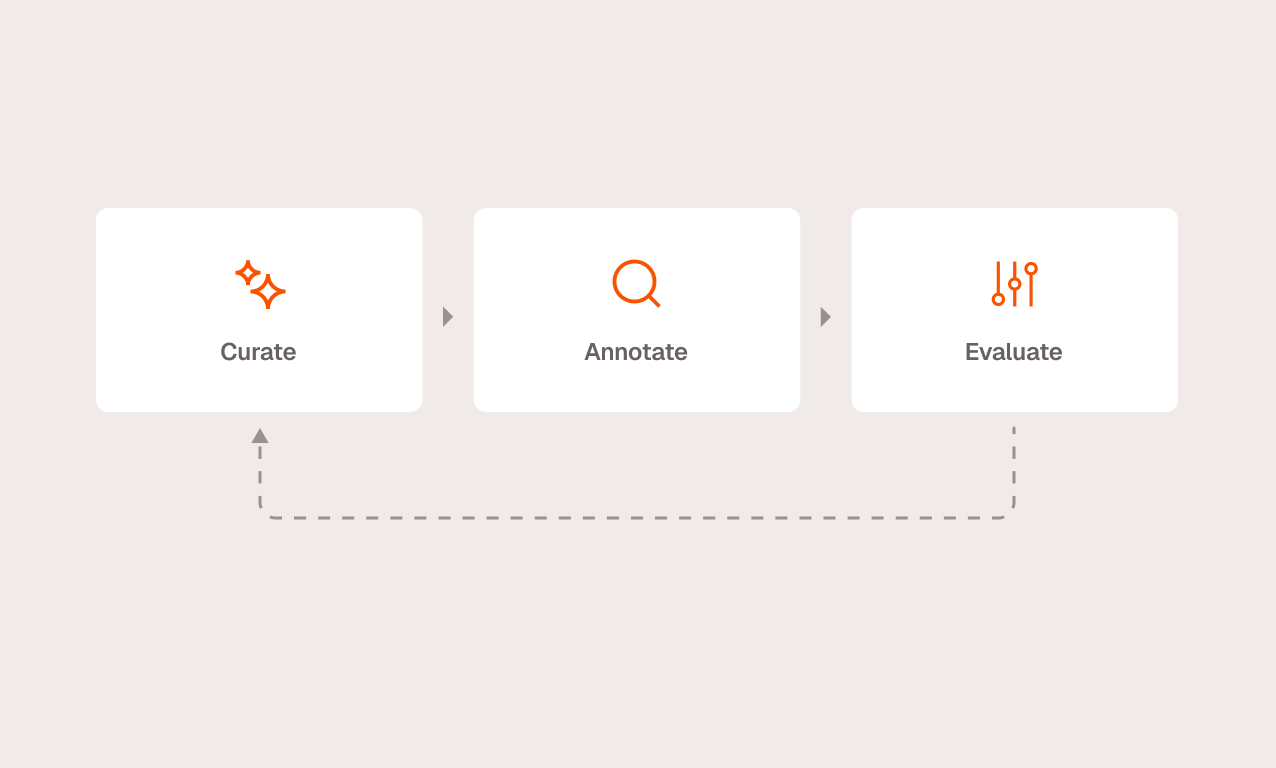
Voxel51 supports multimodal data annotation with synchronized 2D and 3D annotation. Customize workflows to bridge annotation, data curation, and model evaluation in one unified platform.
Speed up image annotation with native support for bounding boxes, polygons, polylines, and classifications. Leverage SAM 2 to generate pixel-perfect semantic masks in a fraction of the time.
Get support for point cloud annotation and lidar in 3D, including 3D cuboid annotation and 3D polylines. Visualize point clouds alongside synchronized 2D camera feeds, radar tracks, and video for more accurate labeling and review.
Seamlessly track objects across timelines using linear interpolation for bounding boxes or deploy SAM 2 object tracking to propagate masks forward and backward through video frames. Combined with robust event labeling tools, capture continuous temporal context and define complex object actions without manual frame-by-frame adjustment.
Data labeling platform
Simplify procurement with enterprise-grade data annotation
Deploy anywhere

Get an end-to-end data flywheel that accelerates model performance
Smart data labeling
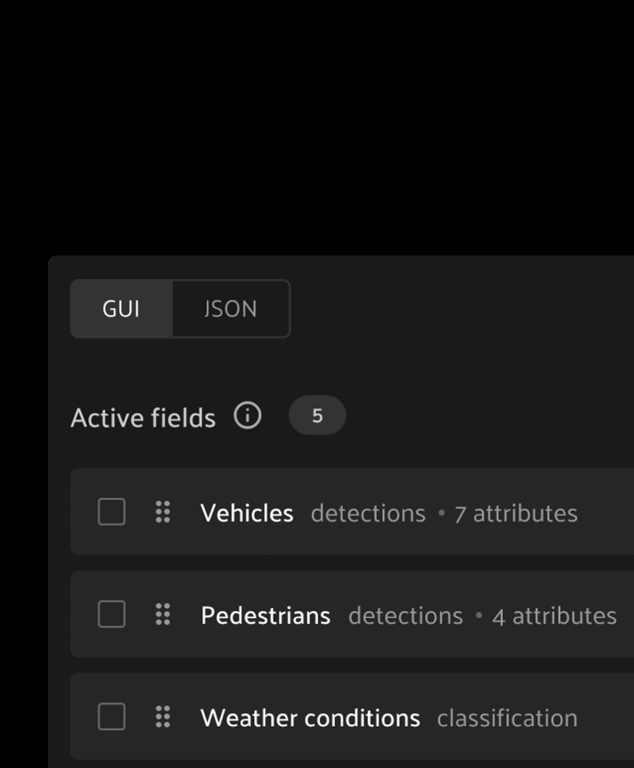
Manage annotation schema
Identify annotation errors
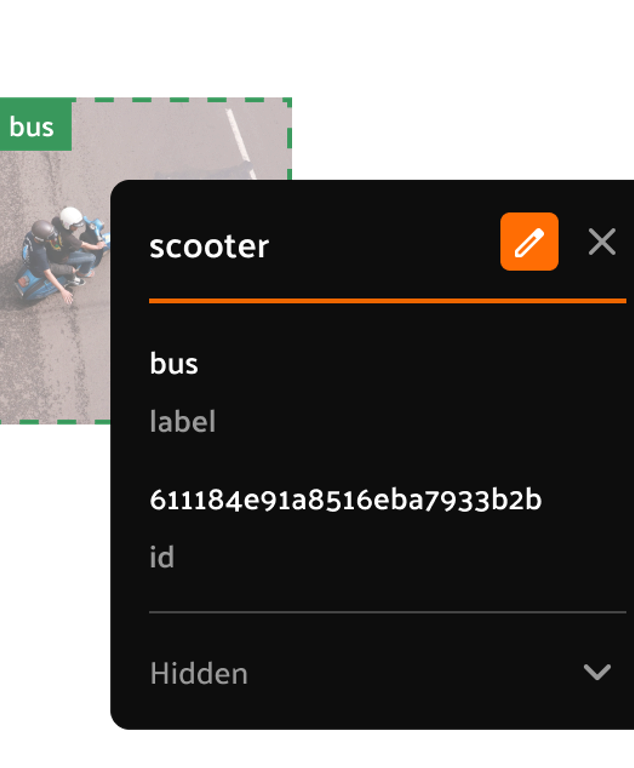
Manually correct labels
ML Research
Auto-labeling rivals human performance
The latest paper from our ML researchers, Auto-Labeling Data for Object Detection, benchmarks auto-labeling against human annotation. We reveal how foundation models can deliver labels at near-human accuracy, while reducing annotation costs by up to 100,000×.

Questions?
We have answers.
Voxel51 Annotation is different from standalone data labeling tools because it is built into an end-to-end visual AI platform, alongside data curation and model evaluation. You can explore your visual data, use active learning to surface the samples most worth labeling, annotate and QA them, and evaluate model performance, all in one platform.
When you find labeling errors during curation or data gaps during evaluation, you fix them in place, with no coordination overhead or tool switching. Voxel51 supports both auto-labeling and human-in-the-loop annotation, and it is the only open source platform built for this full visual AI development loop.
Voxel51 supports annotation across the full range of visual and physical AI data. Your team can label images, video, lidar and 3D point clouds, and multimodal datasets that bring 2D and 3D sensors together in one synchronized view.
Learn more about how Voxel51 handles image annotation and video annotation, with lidar and multimodal support built on the same workflows.
Whatever the modality, you get the same foundation: agentic auto-labeling, configurable review stages, and Intelligent Review to surface labeling errors before they reach training.
Auto-labeling is the process of using machine learning models, including foundation models like Meta's Segment Anything 2 (SAM 2), to automatically generate initial labels, so annotators start from model predictions instead of a blank slate. This significantly reduces manual effort while a human review step keeps quality high. Voxel51's research shows auto-labeling can reach near-human accuracy while cutting annotation costs by up to 100,000×
Instead of labeling every sample from scratch, auto-labeling generates the bulk of annotations automatically, so your team only reviews and corrects them. Human effort concentrates on the challenging, high-value samples that need expert judgment, which active learning helps surface. The result is lower annotation costs and faster dataset preparation, without trading away label quality.
The best auto-labeling tool depends on how well it fits the work you already do, so look at a few key factors: accuracy of the automated labels, how easily it integrates with your existing workflows, support for active learning to prioritize the most valuable samples, scalability across data volumes and modalities, and built-in tools for managing human review. The strongest option is usually a data annotation platform that connects labeling with data curation and model evaluation, so you can streamline annotation, reduce costs, and improve model performance in one place rather than stitching together separate tools.
Yes. Voxel51 provides video annotation tools for labeling objects across frames, including interpolation between keyframes so you don't have to label every frame by hand. Video labeling works alongside image, point cloud, and multimodal data in the same platform, so you can review and QA video annotations next to the rest of your dataset.
Yes. Voxel51 integrates Meta's Segment Anything 2 (SAM 2), using SAM 2 segmentation to generate masks automatically so you can refine them with a few clicks instead of drawing them by hand. It is one of several foundation models Voxel51 uses to auto-label data and accelerate review.
Voxel51 supports the full range of label types used in visual AI: classifications, bounding box annotation, polygon annotation, keypoint annotation, polyline annotation, semantic segmentation annotation, and instance segmentation annotation. For 3D data, it adds 3D bounding box annotation and cuboid annotation across point clouds and multi-sensor scenes.
Voxel51 maintains label quality with Intelligent Review, which uses embeddings, model predictions, and auto-label comparison to surface likely annotation errors across an entire dataset. Instead of spot-checking, your team reviews the highest-risk labels first and resolves issues in bulk. Configurable review stages and inter-annotator agreement checks support annotation QA at scale.
Model-assisted labeling is an approach where machine learning models pre-label your data and annotators correct the results, rather than labeling from scratch. It is closely related to auto-labeling, with more emphasis on the human-in-the-loop step. In Voxel51, model-assisted labeling and pre-labeling speed up annotation while keeping people in control of final quality.
Agentic labeling uses AI agents to label data from natural-language instructions. You describe what you need labeled, the agent produces the labels, and you review and refine the prompt until the results match your annotation guidelines. Unlike fixed auto-labeling pipelines, an agentic approach adapts to new tasks without code, so your team handles edge cases while agents handle the repetitive volume.
© 2026 Voxel51 All Rights Reserved