NVIDIA AI Podcast: Safer AVs with Smart Simulation, Neural Reconstruction, and Data-Centric Tools
Author

Head of Physical AI Partnerships
Building the future of Physical AI at Voxel51 🚀
See all articles by Dan Gural
Try Voxel51 for yourself
Most AV teams are drowning in data and still can't find what they need. They're collecting hundreds of petabytes but training on a fraction of it — and wondering why their models plateau.
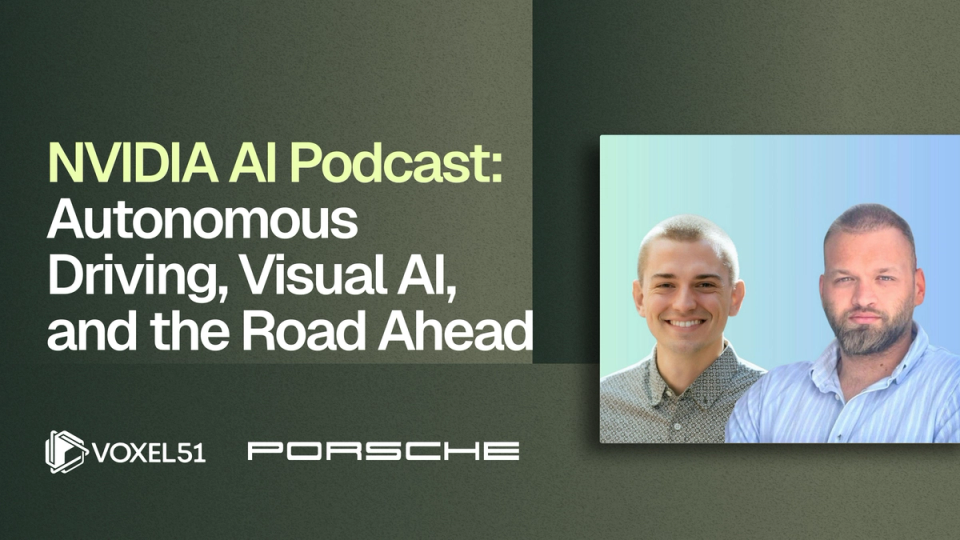
On the latest NVIDIA AI Podcast, I joined host Noah Kravitz and Rohan Bhasin from Foretelix to break down what's actually holding back autonomous vehicle development.
📊 More data isn't the answer—smarter data is. Major AV companies are sitting on hundreds of petabytes, yet most of it is nominal highway driving that adds zero incremental value. The real gains come from finding where your model is uncomfortable and training on exactly that.
🔁 The physical-to-digital translation is where most teams silently fail. Misaligned cameras, bad timestamps, uncalibrated LiDAR—more than 50% of large AV companies we work with fail basic data integrity checks. If your model doesn't see the scene the way it actually happened, everything downstream degrades.
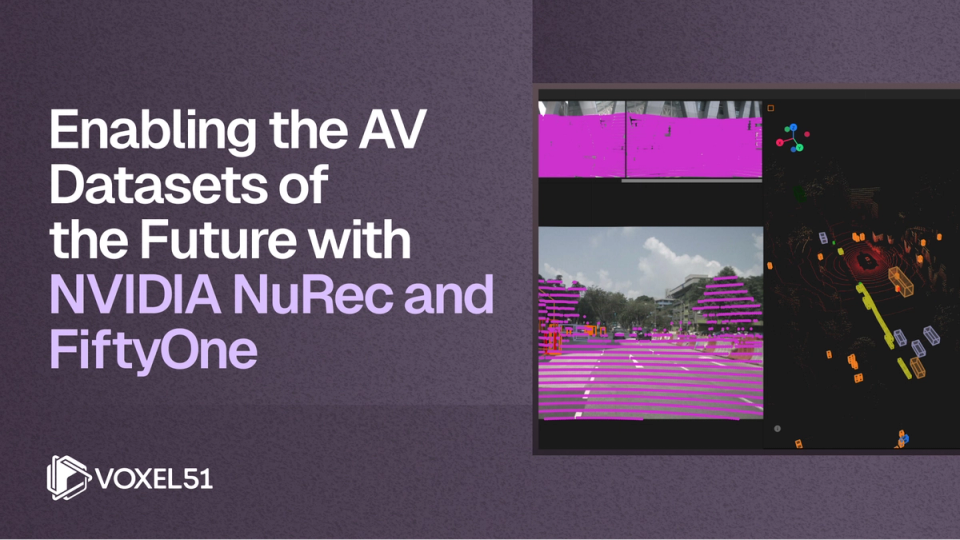
🧪 Neural reconstruction has made old data valuable again. Years of drive logs collecting dust on hard drives are suddenly useful. With tools like NVIDIA Omniverse NeuRec and 3D Gaussian splatting, teams can reconstruct those logs and generate safety-critical variations—no more checking the weather forecast to find a rainy training scene.
🎮 Five years ago, people were crashing cars in GTA V to capture data. Today, we're generating photorealistic edge-case scenarios with foundation models like NVIDIA Cosmos in a matter of prompts. The pace of progress here is staggering.
🏗️ AV teams need more connected workflows, not working in silos. Right now there's a separate team for data ingestion, another for reconstruction, another for simulation, another for safety — often working in isolation. The companies that win will be the ones that unify these into cohesive pipelines where every team works together.
If you're working in AV and tired of throwing petabytes at the problem, this one's worth a listen.
At Voxel51, we built the Physical AI Workbench to solve this from the ground up, helping you transform raw multimodal sensor data into high-fidelity simulation-ready datasets.
Head of Physical AI Partnerships
Building the future of Physical AI at Voxel51 🚀
See all articles by Dan Gural
Try Voxel51 for yourself
Loading related posts...
© 2026 Voxel51 All Rights Reserved